Choosing a down jacket manufacturer involves much more than comparing unit prices. Buyers need to evaluate insulation materials, fill specifications, shell fabrics, sampling, customization, production consistency and quality control before placing a bulk order. This guide explains the key factors to review when sourcing custom down jackets for corporate, workwear, retail or private-label programs.
Down Jacket Manufacturer
Custom Down Jackets
Bulk & OEM Orders
Quality Control
Quick Answer
A reliable down jacket manufacturer should be able to explain the difference between shell fabric, insulation type, fill power, fill weight and garment construction rather than quoting only a jacket price. For bulk orders, buyers should also verify customization capability, sample approval procedures, production quality control, size consistency, packaging and delivery requirements before mass production begins. |
Down jackets are highly specification-sensitive garments. Two jackets can look almost identical in a product photo but perform very differently because of differences in insulation, fill quantity, shell construction, stitching, baffle design, hardware and manufacturing consistency.
For importers, distributors, corporate workwear buyers and private-label brands, the goal is therefore not simply to find the lowest quotation. A better approach is to work with a down jacket manufacturer that can translate the intended application into a clear product specification and repeat that specification consistently across the full order.
1. Start with the Intended Use of the Down Jacket
Before discussing down percentage, zippers or colors, define how and where the jacket will actually be used. A lightweight corporate jacket for commuting has different requirements from cold-weather industrial workwear or an outdoor jacket intended for long periods in low temperatures.
| Application | Main Priorities | Questions to Ask |
|---|
| Corporate Uniform | Appearance, logo, comfort, sizing | Can colors and branding stay consistent across reorders? |
| Industrial Workwear | Durability, warmth, pockets, movement | Will the shell, seams and hardware withstand daily work? |
| Retail / Private Label | Fit, design, labels, packaging | Can the factory develop custom patterns and branding? |
| Outdoor / Cold Climate | Insulation, wind protection, moisture management | What insulation and shell combination matches the target climate? |
2. Understand Down, Synthetic Fill, Fill Power and Fill Weight
Insulation is one of the most important specifications in a thermal jacket, but it is also one of the most misunderstood. Buyers should avoid evaluating a jacket based on a single number.
Natural Down vs Synthetic Insulation
| Factor | Natural Down | Synthetic Insulation |
|---|
| Warmth-to-Weight | Generally very good | Depends on fiber and construction |
| Compression | Usually packs down well | Varies by material |
| Moisture Consideration | Requires appropriate shell and care | Often selected for easier moisture management |
| Cost | Often higher | Can offer more flexible price points |
| Typical Buyer | Premium outerwear and lightweight thermal products | Workwear, corporate jackets and cost-controlled programs |
Fill Power Is Not the Same as Fill Weight
Fill power describes the lofting ability of down, while fill weight refers to the actual quantity of insulation used in a garment. A jacket with high fill-power down but very little fill may still be designed as a lightweight jacket. Conversely, adding more insulation changes warmth, bulk, weight and cost.
|
Buyer Tip
Do not ask a down jacket supplier only, “What is the fill power?” Ask for the insulation type, down/feather composition where applicable, fill power, approximate fill weight by garment size and the target use of the jacket. These specifications provide much more useful purchasing information. |
3. Evaluate Shell Fabric and Garment Construction
Insulation alone does not determine whether a jacket performs well. The shell fabric and garment structure affect wind resistance, durability, appearance, down leakage, mobility and everyday maintenance.
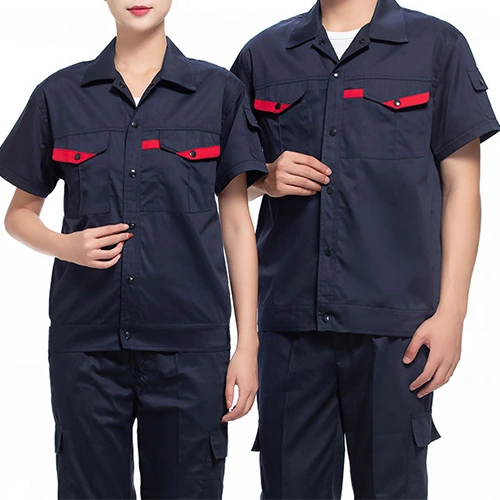
Shell FabricConfirm fiber composition, fabric weight, hand feel, wind resistance, water-repellent requirements and abrasion expectations. The ideal shell depends on whether the jacket is used for office commuting, warehouse work or outdoor operations. |
|
Baffle ConstructionThe internal or stitched chamber design helps keep insulation distributed throughout the jacket. Buyers should inspect whether the filling appears even and whether obvious cold spots develop around seams or panels. |
|
Zippers & ClosuresZipper quality directly affects daily usability. For workwear and frequent-use jackets, check zipper smoothness, puller strength, snap buttons, Velcro, storm flaps and replacement availability. |
|
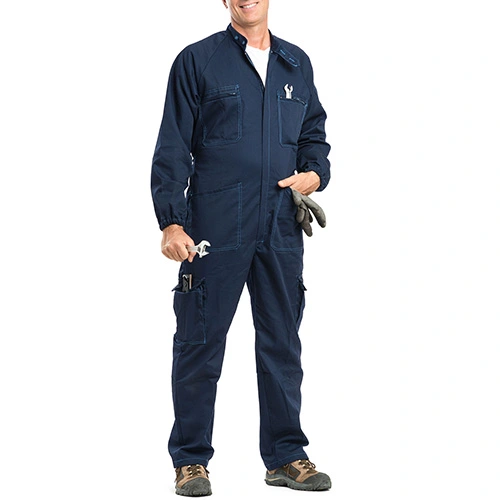
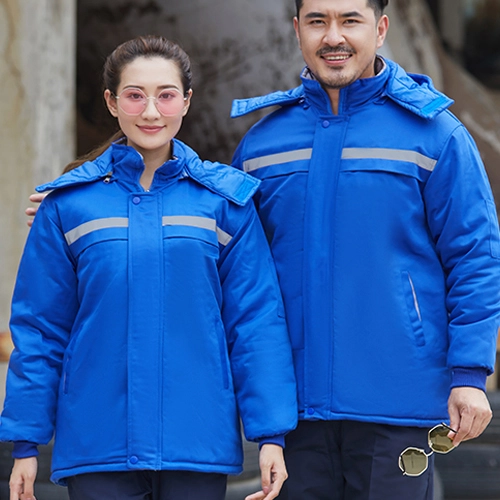
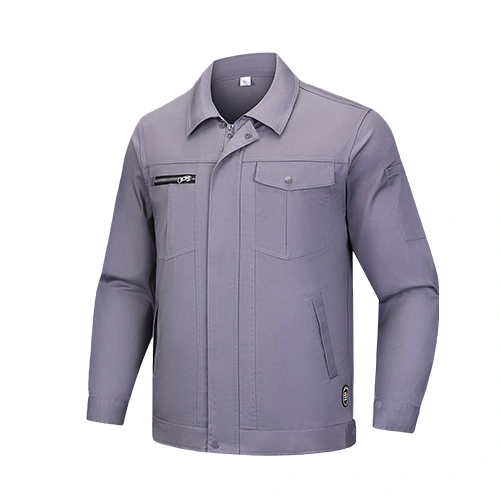
Pocket & Hood DesignCorporate and industrial users may require chest pockets, hand-warmer pockets, secure internal pockets, detachable hoods, adjustable cuffs or drawcord hems. These details should be included in the specification before sampling. |
4. Check the Manufacturer's OEM and Customization Capability
If you are purchasing for a brand, distributor or company uniform program, customization usually goes far beyond adding a logo to a standard jacket.
A capable OEM partner should be able to coordinate jacket structure, shell material, insulation, colors, trim, labeling, sizing and packaging. Buyers requiring a broader apparel program can also review OEM/ODM clothing manufacturing services before finalizing the project.
| Customization Area | Options to Confirm |
|---|
| Colors | Standard colors, custom color matching, contrast panels |
| Logo | Embroidery, printing, patches, position and dimensions |
| Pattern | Standard block, adjusted fit or custom pattern development |
| Hardware | Zippers, snaps, cord locks, pullers and branded trims |
| Labels | Main label, care label, size label and private-label branding |
| Packaging | Individual bags, cartons, barcode labels and customer-specific packing |
5. Confirm MOQ, Sampling and Pre-Production Approval
MOQ should not be considered separately from customization. A standard jacket in an existing fabric and color may have a different minimum quantity from a fully customized jacket requiring new fabric, custom dyeing, trims, labels and pattern development.
Instead of asking only “What is your MOQ?”, give the manufacturer a complete specification and request the MOQ for that specific configuration.
| Sample Stage | What to Check |
|---|
| Material Confirmation | Shell, lining, insulation, zippers, trims and colors |
| Fit Sample | Chest, length, sleeve, shoulder, mobility and layering space |
| Logo Sample | Size, position, thread or print color and durability |
| Pre-Production Sample | Final approved materials, construction and accessories before bulk production |
|
Do Not Skip the Approved Sample
For bulk custom down jacket orders, the approved sample should become the reference for production. Important details such as fabric, measurements, insulation, pocket positions, branding and trims should be confirmed before the manufacturer begins mass production. |
6. Review Quality Control Before Bulk Production
One good sample does not guarantee that thousands of jackets will be consistent. For large orders, quality control should cover materials, cutting, sewing, filling, finishing, measurements and packing.
Bulk Down Jacket QC Checklist
✓ Shell fabric and color match the approved standard
✓ Insulation type and specification are correct
✓ Filling is distributed consistently across garment panels
✓ Garment measurements stay within agreed tolerances
✓ Stitching is clean and high-stress areas are secure
✓ Zippers, snaps and drawcords operate correctly
✓ Logo size, color and location match approval
✓ Pockets and lining are properly finished
✓ Labels and care information are correct
✓ Final packaging matches shipping requirements |
If your business also purchases uniforms or industrial apparel, working with a supplier that handles custom workwear manufacturing can make it easier to maintain consistent branding and sizing across multiple garment categories.
Should You Ask About Responsible Down and Material Claims?
If certified or responsibly sourced down is part of your purchasing requirement, state this clearly at the RFQ stage and ask the supplier to provide appropriate supporting documentation. The Responsible Down Standard (RDS), managed by Textile Exchange, addresses animal welfare and chain-of-custody requirements in certified down supply chains.
Buyers selling into the United States should also ensure that down and feather composition claims are accurate. The U.S. Federal Trade Commission emphasizes that advertising claims for feather and down products must be truthful, non-deceptive and supported.
Further information is available from Textile Exchange's Responsible Down Standard
and the Federal Trade Commission's guidance on feather and down claims.
Down Jacket Manufacturer RFQ Checklist
Sending a detailed RFQ helps a down jacket supplier provide a more accurate quotation and reduces repeated questions during product development.
| Information | Example |
|---|
| Application | Corporate, workwear, retail, outdoor |
| Quantity | Total quantity and size breakdown |
| Insulation | Natural down or synthetic thermal fill |
| Shell | Material, color and required performance |
| Design | Reference image, tech pack or existing sample |
| Branding | Logo, labels, zipper pullers and packaging |
| Certification | Any required material or market-specific documentation |
| Delivery | Destination and required delivery date |
Planning a Bulk or Custom Down Jacket Order?Send your target design, quantity, insulation requirements, colors, logo and delivery needs to QiaFengShengShi for a custom down jacket quotation.
Request a Quote |
FAQs About Choosing a Down Jacket Manufacturer
What should I ask a down jacket manufacturer before ordering?
Ask about shell materials, insulation options, fill specifications, customization, MOQ, sampling, size grading, quality control, packaging and production lead time. If your project requires specific certification or material traceability, confirm this before sampling.
Is higher fill power always better for a down jacket?
Not necessarily. Fill power describes down loft, but the finished jacket also depends on fill weight, garment design, shell fabric and intended use. Buyers should evaluate the complete insulation specification rather than relying on fill power alone.
Should I choose down or synthetic insulation for bulk jackets?
The choice depends on the application, target price, garment weight, moisture conditions and performance requirements. Natural down is often selected for lightweight warmth, while synthetic insulation can be suitable for corporate, industrial and cost-controlled programs.
What affects the MOQ for custom down jackets?
MOQ can be affected by fabric availability, custom colors, insulation, trims, labels, pattern development and packaging. A standard design usually has different production conditions from a fully customized private-label jacket.
Should I approve a sample before placing a bulk order?
Yes. The sample allows you to verify materials, fit, measurements, insulation, construction, logo placement and trims. For custom manufacturing, a final approved sample provides an important reference for bulk production.
How can I compare quotations from different down jacket suppliers?
Compare quotations only after confirming that the specifications are equivalent. A lower price may reflect a different shell fabric, insulation, fill quantity, zipper, lining, packaging or quality requirement. Create one RFQ specification and ask each supplier to quote against the same requirements.
|
Final Buying Tip The best down jacket manufacturer is not simply the supplier offering the lowest unit price. Compare suppliers based on the complete product specification, sampling process, material transparency, customization capability and ability to maintain consistent quality during bulk production. |