Anti-static clothing and ESD workwear are often used as interchangeable terms, but they do not always describe exactly the same requirement. For electronics, semiconductor, cleanroom and industrial buyers, choosing the correct garment means understanding conductive fabrics, surface resistance, ESD control programs, workplace applications and laundering requirements.
Anti-Static Clothing
ESD Workwear
Surface Resistance
ESD Protection |
Quick Answer Anti-static clothing is a broad term for garments intended to reduce or control static charge buildup. ESD workwear is generally selected as part of a controlled electrostatic discharge program, particularly where workers handle static-sensitive electronic components. The correct garment should therefore be selected according to the actual ESD risk, fabric construction, tested electrical properties, workplace procedures and applicable standards rather than by the words “anti-static” on a product label alone. |
Static electricity can be invisible to the worker while still being important to the manufacturing process. In electronics production, a discharge that is too small for a person to notice may still affect an electrostatic-discharge-sensitive component. In other industries, accumulated static can create different process or safety concerns.
This is why industrial buyers should distinguish between general antistatic clothing and garments selected for a formal ESD-controlled environment. Companies sourcing technical garments can review QiaFengShengShi's anti-static workwear and coveralls when comparing fabric construction, conductive yarn layouts and customization requirements.
What Is Anti-Static Clothing?
Anti-static clothing is workwear designed to help limit the accumulation of electrostatic charge on the garment or wearer. Depending on the product and application, this may be achieved through conductive fibers incorporated into the fabric, specialized yarn structures or other static-control technologies.
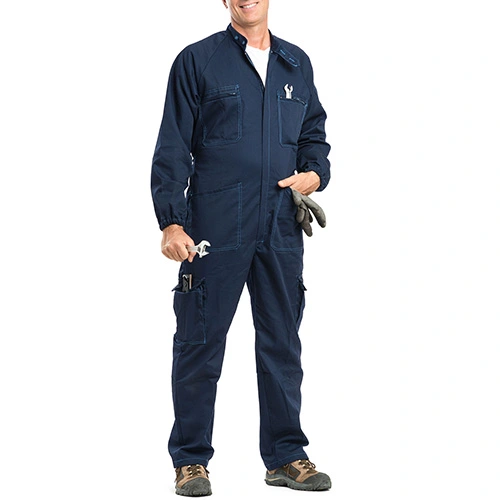
The term covers a broad range of garments, including anti-static coveralls, jackets, trousers, coats and cleanroom garments. However, the description “anti-static” by itself does not tell a buyer the garment's exact electrical performance, test method or suitability for a particular ESD control program.
What Is ESD Workwear?
ESD workwear is clothing selected to support control of electrostatic discharge in environments where static-sensitive products are manufactured, assembled, tested, packaged or handled.
In an ESD-protected area, clothing should not be considered an isolated solution. Effective electrostatic control may also involve personnel grounding, flooring, footwear, work surfaces, packaging, training and verification procedures. The garment is one element within a larger ESD control system.
Anti-Static Clothing vs ESD Workwear: Key Differences
| Factor | General Anti-Static Clothing | ESD Workwear |
|---|
| Main Purpose | Reduce or manage static accumulation | Support a controlled ESD protection program |
| Typical Applications | Industrial production, laboratories and static-control environments | Electronics, PCB, semiconductor and other ESDS handling areas |
| Fabric | May contain conductive or static-dissipative elements | Electrical performance should match the ESD control requirement |
| Testing | Depends on product specification | Should be evaluated using appropriate ESD test and verification methods |
| System Integration | May be used independently for general static control | Normally used together with other ESD control measures |
How Conductive Fabric Helps Control Static
Many types of anti static workwear use polyester fabric interwoven with conductive yarn. The conductive elements create paths through the textile that help manage electrical charge instead of allowing it to remain concentrated on isolated areas of the garment.
The exact fiber content, spacing and garment construction vary according to the intended application. QiaFengShengShi's current antistatic coverall range, for example, uses polyester combined with conductive carbon fiber and offers grid and stripe conductive-yarn structures. :contentReference[oaicite:1]{index=1}
Grid Conductive FabricConductive yarn runs in both directions to form a grid pattern. This construction is commonly selected where buyers require more uniform conductive paths across the fabric. |
|
Stripe Conductive FabricConductive yarn is arranged primarily in parallel lines. Stripe constructions may be suitable for applications where the required electrical and contamination-control performance can be achieved with this fabric design. |
What Does Surface Resistance Mean in Anti-Static Workwear?
Surface resistance is commonly used when describing how resistant a material is to electrical current moving across its surface. In technical workwear, resistance data can help buyers compare fabric or garment performance, but the number should always be interpreted together with the test method and application.
|
Important: Do Not Select ESD Clothing by One Resistance Number Alone
Resistance ranges can be useful specifications, but the test method, electrode configuration, environmental conditions, garment construction and ESD program requirements also matter. Buyers should ask the supplier what was tested, how it was tested and whether the result is appropriate for their own ESD control plan. |
QiaFengShengShi currently specifies a surface resistance range of 106 to 109 Ω for its antistatic workwear range. For a purchasing project, this specification should still be checked against the buyer's own ESD control requirements and required verification procedure.
Which ESD Standards Should Buyers Know?
Two commonly referenced documents in electronics ESD control are IEC 61340-5-1 and ANSI/ESD S20.20. Both address the establishment and maintenance of electrostatic discharge control programs for organizations handling ESD-sensitive electrical and electronic parts.
| Reference | What Buyers Should Understand |
|---|
| IEC 61340-5-1 | Provides general requirements for an ESD control program protecting electronic devices from electrostatic phenomena. |
| ANSI/ESD S20.20 | Provides administrative and technical requirements for establishing, implementing and maintaining an ESD control program for sensitive electronic parts and equipment. |
These standards reinforce an important point: ESD protection is a system. Clothing, grounding, footwear, flooring, packaging, workstations and personnel procedures need to work together rather than being evaluated separately.
Where Is Anti-Static and ESD Workwear Used?
| Industry | Main Concern | Workwear Consideration |
|---|
| Semiconductor | Sensitive devices and controlled production | ESD performance, particle control and garment coverage |
| Electronics & PCB | Component damage from electrostatic discharge | Conductive fabric, appropriate grounding and ESD procedures |
| Cleanroom Production | Static plus particle contamination | ESD performance must be considered together with cleanliness requirements |
| Pharmaceutical & Laboratory | Controlled environment and contamination | Low-lint fabric, laundering compatibility and application-specific static control |
| Industrial / Energy | Static accumulation and other workplace hazards | Anti-static performance may need to be combined with other protective requirements |
|
Anti-Static Does Not Automatically Mean Flame Resistant
Static control and flame resistance address different hazards. If workers are exposed to heat, flame, arc or flammable atmospheres, the protective clothing specification should be based on the complete workplace risk assessment. A standard anti-static overall should not automatically be assumed to provide flame protection. |
Is ESD Workwear the Same as Cleanroom Clothing?
No. Cleanroom clothing and ESD workwear can overlap, but the two terms focus on different performance objectives.
Cleanroom garments are primarily selected to help control contamination generated by people and clothing. ESD workwear focuses on electrostatic control. Semiconductor and advanced electronics facilities may require garments that perform both functions, while another workplace may need only one.
Buyers should therefore specify particle-control requirements and ESD requirements separately instead of assuming that every cleanroom garment is automatically ESD suitable or every antistatic garment is suitable for a cleanroom.
How Washing and Wear Affect Anti-Static Clothing
Anti-static garments are repeatedly exposed to movement, perspiration, industrial laundering and mechanical wear. Over time, damage to fabric, conductive yarn, closures or garment construction may affect performance.
An ESD garment program should therefore include clear care instructions and a defined inspection or verification process rather than assuming that a garment remains suitable indefinitely.
ESD Garment Maintenance Checklist
✓ Follow the garment manufacturer's washing instructions
✓ Avoid unapproved treatments that may alter electrical behavior
✓ Inspect conductive fabric for visible wear or damage
✓ Check cuffs, closures, seams and garment integrity
✓ Keep records where the ESD control program requires verification
✓ Replace garments that no longer meet the required performance |
How to Choose Anti-Static Workwear for Your Facility
Instead of sending a supplier a request for “anti static clothes,” prepare a technical RFQ based on the workplace and ESD control requirements.
| Selection Factor | What to Confirm |
|---|
| Application | Electronics, semiconductor, cleanroom, pharmaceutical or general industrial use |
| ESD Requirement | Required control program, test method and acceptance criteria |
| Fabric | Fiber composition, conductive yarn type, grid or stripe structure and GSM |
| Garment Design | Coverall, jacket, trousers, cuffs, closures and pocket configuration |
| Environment | Cleanroom classification, temperature, humidity and contamination requirements where applicable |
| Laundering | Expected washing method, frequency and replacement program |
| Customization | Colors, sizing, logos, labels, pockets and ESD-safe garment details |
Companies developing different garments for production teams can also combine technical clothing with a broader factory worker uniform program or review OEM/ODM workwear manufacturing for customized sizing, fabric and garment construction.
Questions to Ask an Anti-Static Workwear Manufacturer
✓ What is the fabric composition?
✓ How is the conductive yarn incorporated into the fabric?
✓ Is the fabric available in grid and stripe structures?
✓ What electrical property has been tested?
✓ Which test method was used?
✓ Can you provide technical data or test documentation?
✓ How should the garment be washed?
✓ Can colors, pockets, cuffs and closures be customized?
✓ Can the garment be produced to our own ESD specification?
✓ Can a pre-production sample be tested before bulk manufacturing? |
Need Custom Anti-Static or ESD Workwear?Send your industry, ESD requirements, fabric specifications, garment design, quantity and customization needs to QiaFengShengShi for a technical workwear quotation.
Request a Quote |
Anti-Static Clothing and ESD Workwear FAQs
Is anti-static clothing the same as ESD clothing?
Not necessarily. Anti-static clothing is a broad description for garments intended to reduce static accumulation. ESD clothing is usually selected within a defined electrostatic discharge control program. Buyers should verify the actual fabric performance, test method and application rather than relying on terminology alone.
What fabric is used for anti-static workwear?
A common construction uses polyester combined with conductive yarn such as carbon-based conductive fiber. The conductive yarn may be arranged in grid or stripe patterns. The appropriate material should be selected according to the electrical, comfort, contamination-control and laundering requirements of the application.
What surface resistance should ESD workwear have?
There is no single resistance number that should be applied to every garment and every ESD program. Buyers should define the required performance according to the applicable standard, test method and facility ESD control plan. Resistance data should always be reviewed together with how the garment was tested.
Is every cleanroom garment anti-static?
No. Cleanroom garments primarily address contamination control, while ESD garments address electrostatic control. Some technical garments are designed to meet both requirements, but buyers should verify each performance characteristic separately.
Does anti-static clothing protect against flame?
Anti-static performance should not automatically be interpreted as flame resistance. These properties address different hazards. If workers require flame, heat or arc protection, the garment specification should include the appropriate protective performance for those hazards.
Can anti-static coveralls be customized for bulk orders?
Yes. Depending on the manufacturing program, buyers can specify fabric structure, garment style, colors, sizing, cuffs, closures, pockets, labels and branding. For technical ESD applications, any customization should preserve the required electrical and garment performance.
|
Final Selection Tip Do not choose ESD workwear only by garment color, price or a supplier's “anti-static” label. Start with your facility's ESD risk and control program, then evaluate fabric construction, tested electrical properties, garment design, cleanroom requirements, washing procedures and supplier documentation before approving bulk production. |